
Four Books that Redefine our Relationship with Nature
By Jenna Barad
In the last year, our monthly book club has selected many books that explore and change the way in which we view and interact with the living world that surrounds us and of which we are a part of. Through this literature and discussion we question and appreciate the undeniable similarities and differences that humans as a species share with the ecosystems we are in constant interactions with.
Here are some of our favorites:
Entangled Life
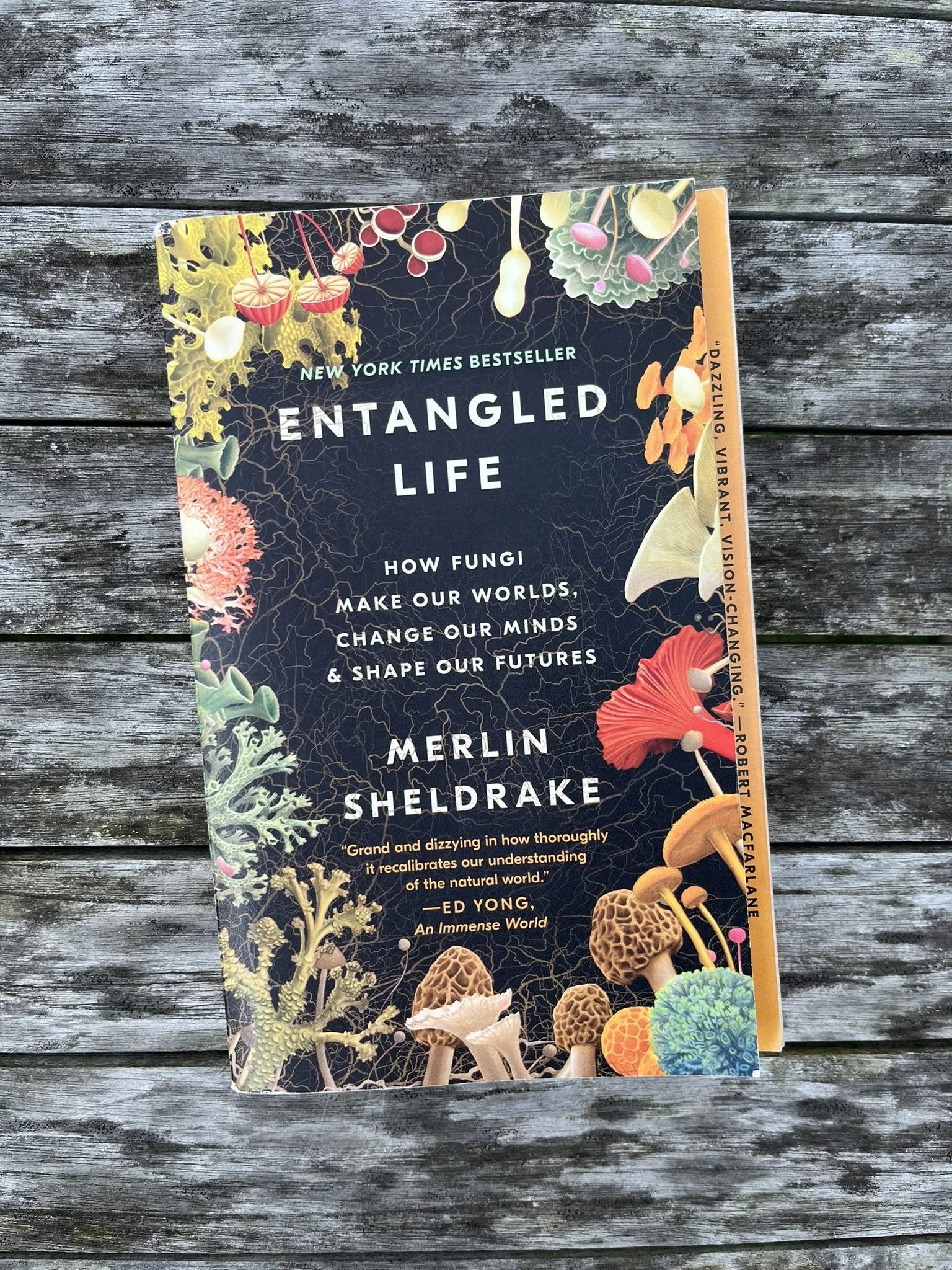
Written by British writer and mycologist (biologist who studies fungi) Merlin Sheldrake in 2020, Entangled Life explores the unique life of fungi which are neither animals nor plants and occupy their own space in the realm of nature. Fungi shape ecosystems in remarkable ways, connecting forests through intricate underground systems, aiding us with food production and medicine, recycling nutrients which make life on Earth possible, among other roles, many of which are continuing to be discovered. One truth remains consistent within the inconsistencies of their function, their reliance on each other. Sheldrake emphasizes that species may function independently, but ultimately require togetherness to thrive.
A member of our book club shares that the stories of fungi “counters the popular dogma of "survival of the fittest" by showing hundreds of species and entire ecosystems that are more resilient and adaptable when cooperating rather than competing”. Ultimately, Entangled Life invites readers to reimagine the relationships that sustain life, conveying that even the smallest and most overlooked organisms can teach us profound lessons about connection, resilience, and mutual dependence.
The Overstory
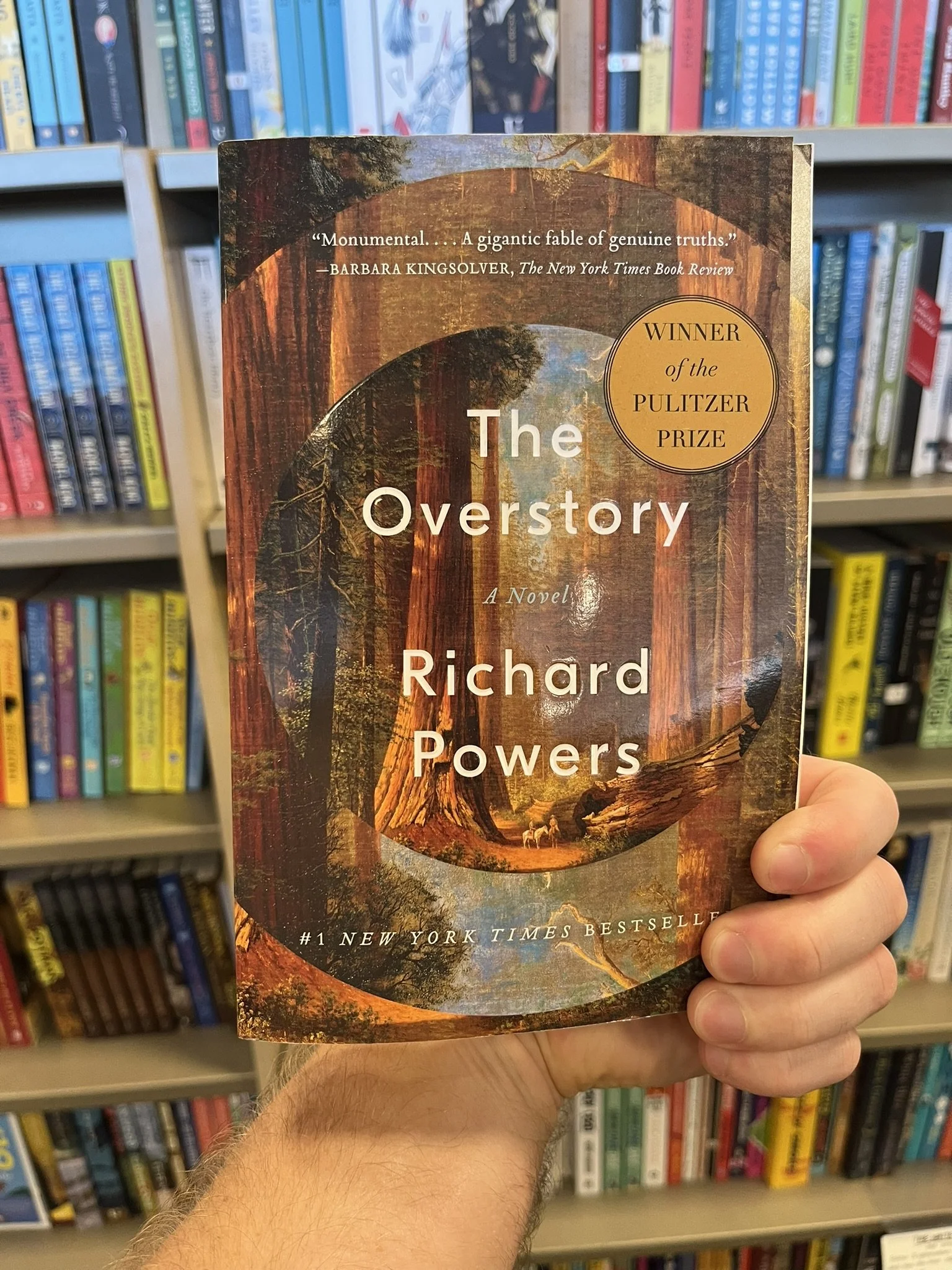
Written by American author Richard Powers in 2018, The Overstory explores the complex lives of trees and the intricate relationships that connect forests, ecosystems, and humans. As a fiction novel, The Overstory follows the lives of nine individuals across different timelines and backgrounds, with trees and forests remaining the constant thread that connects their stories. The second half of the novel brings these characters together through a shared fight to protect forests, placing environmental activism at the center of the story as they confront the destruction caused by logging and human exploitation. Through Power’s work, trees are not passive resources, but essential members of living communities.
“I was transported to an alien landscape, as if I had taken a rocket to another planet. Whole ecosystems, as alien to the deep sea is to most people, thrive there,” describes SBPC Biologist Mary Simun. “Perspective. It is all about perspective. Look up, look down, stand on something tall and survey the world around you. Perspective.” The Overstory is a passionate book that encourages its readers to further analyze their individual relationships to trees and the natural world that surrounds us.
Gathering Moss
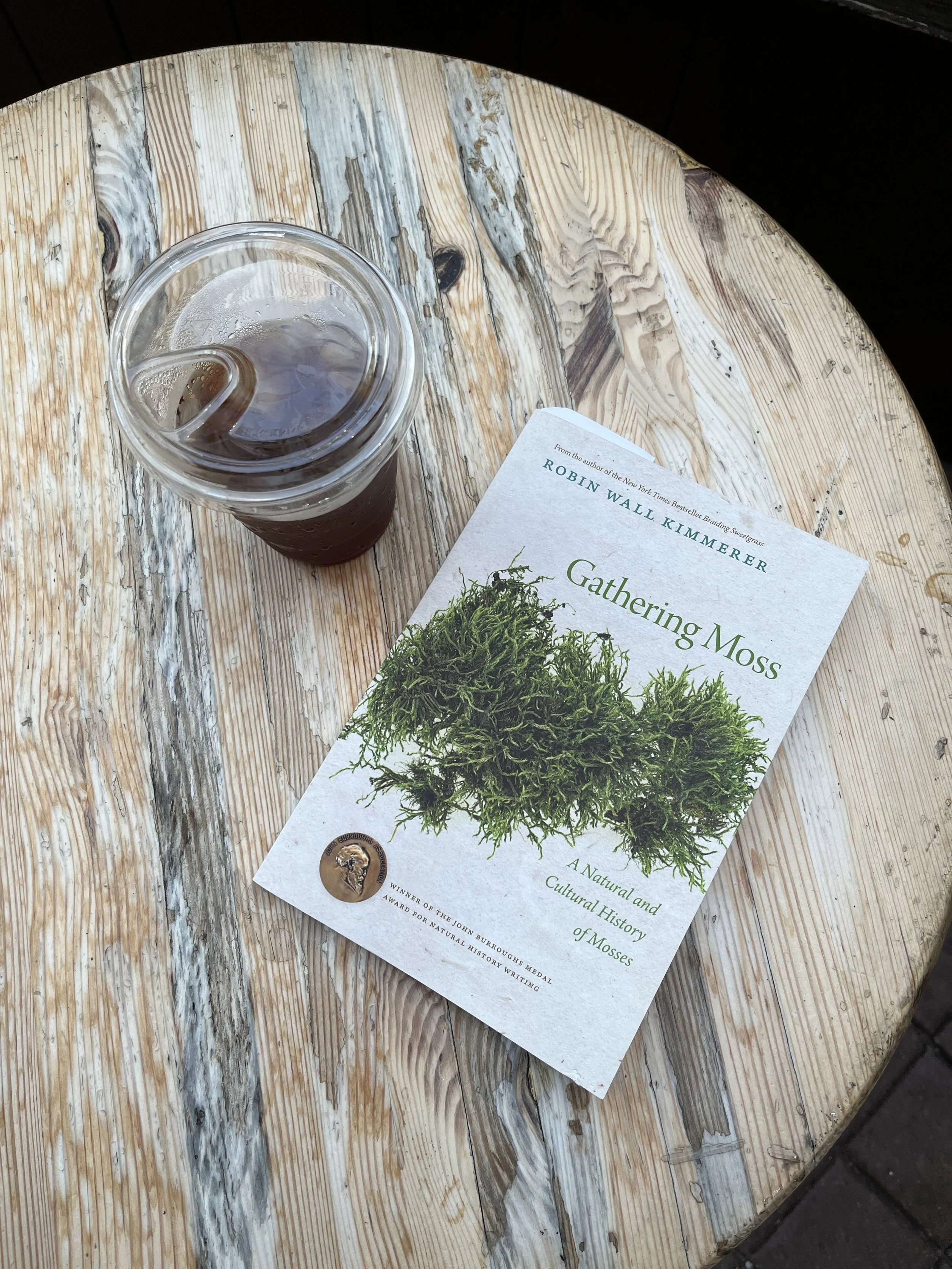
Written by botanist and Indigenous scholar Robin Wall Kimmerer in 2003, Gathering Moss explores the overlooked world of mosses and the lessons they reveal about ecology, resilience, and our relationship with the natural world. While moss are a plant, their lack of a vascular system, true roots, stems, and leaves, differentiate them from traditional plants. Gathering Moss is a beautifully written and engaging mix of science and personal feelings that encourages readers to explore and learn from the simple and graceful lives of mosses.
Our book club agrees that, “Robin Wall Kimmerer is not only a brilliant essayist, but a professor, naturalist and mother which all comes together in Gathering Moss as she weaves scientific insight with personal reflection to explore the fascinating world of mosses. Before reading this book, I thought mosses were merely pretty. She shows how the biology of moss and lichens offer lessons to our everyday lives.”
Mosses are another group of organisms that are often overlooked, receiving far less cultural attention than more prominent species like trees. Through her personal essays, Kimmerer reveals the intricate lives of mosses and the ways they are deeply connected to the ecosystems around them, supporting and interacting with countless other species. Kimmerer draws from her background in science as well as her heritage as a Native American, allowing her to convey a distinctive and admirable perspective tied to ecological knowledge, indigenous cultural traditions, and the natural world. A lesson all interested in the natural world have learned is that no life is too small to hold significance and these collections of essays assert just that in a beautiful and well rounded manner.
The Last Child in the Woods
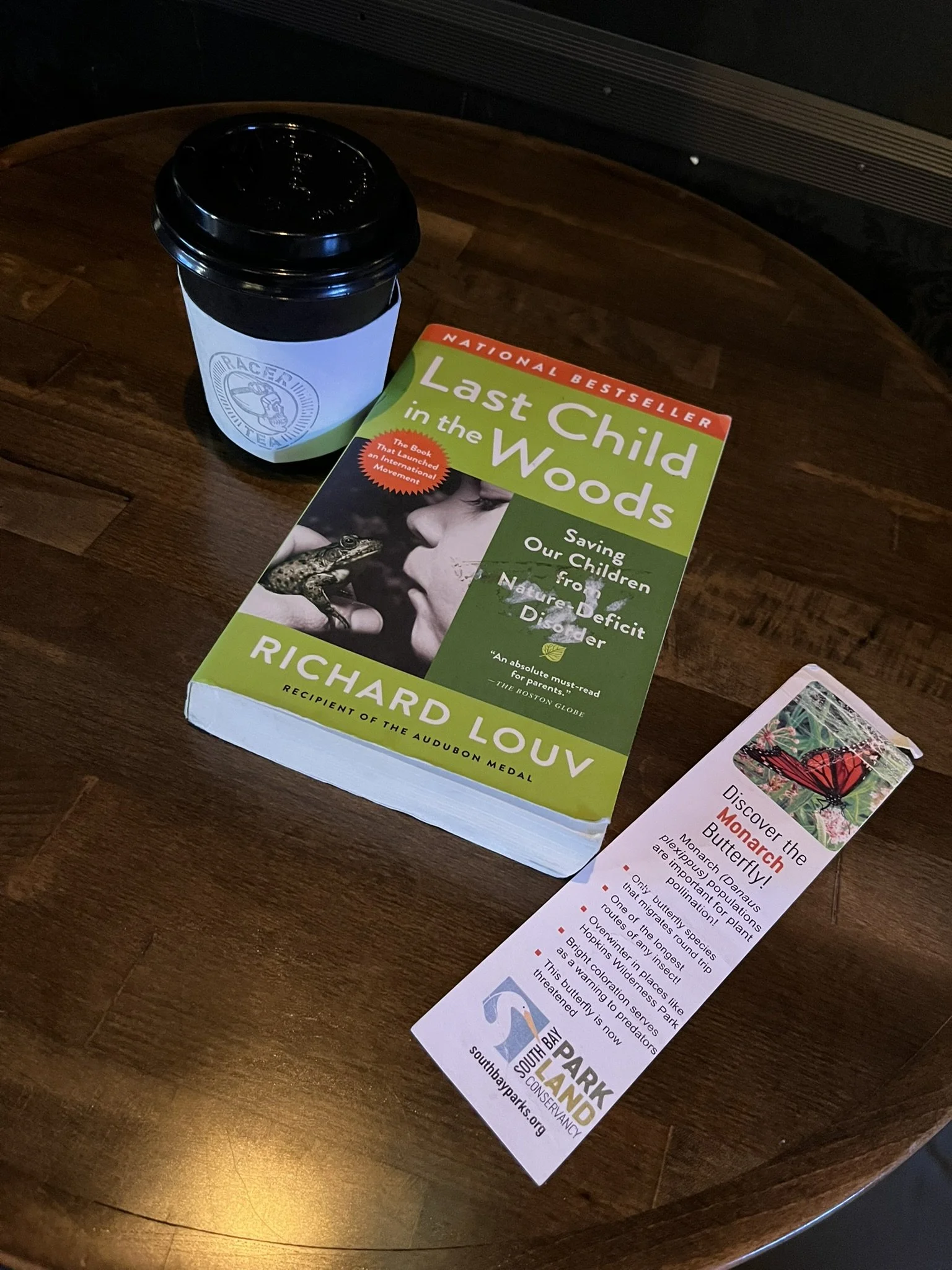
Written by child advocacy expert Richard Louv in 2005, Last Child in the Woods explores the growing disconnect between children and the natural world and the consequences of a childhood spent increasingly indoors. Children today would be more likely to identify a cartoon or car brand over a native species that has been present throughout their lives. Louv describes that while “nature-deficient disorder” is not a medical condition, but rather describes the physical, emotional, and developmental consequences of alienation from nature at a young age. Through research, personal stories, and observations, this educational book reveals how forests, parks, and wild spaces provide opportunities for creativity, curiosity, and connection that technology cannot replace.
A personal anecdote from SBPC Biologist Mary Simun expresses, “I have always loved nature and need to be connected to it, physically. This book gave me a way to describe that necessity to others, and share that everyone has this need to some degree. As an educator it helped advise me on how to work with young people and nature in an education system not designed around children's holistic health, welfare, or learning”. Isolation from nature has become a continuously pressing matter since this book was originally published in 2005 and while it emphasizes the challenges of modern childhood under these circumstances, Louv also presents a hopeful vision of reconnecting future generations with nature.
Interested in joining the book club? Want to suggest a book?
Email info@southbayparks.org