
The Marvel of Mulch
By Betty Starr
Adding a layer of mulch to your garden beds around freshly planted native plants is not only attractive but also imparts a wide variety of benefits to the garden.
But first, what is mulch?
Most mulch is made from natural items like wood chips, bark, leaves, and straw. It is best when it is chopped up into small (1” to 2” pieces). CA native plants prefer mulch that breaks down slowly over time.
There are many benefits in using mulch:
the organic material adds nutrients to your soil as it decomposes
it protects the soil and helps it retain moisture
when spread thickly (around 4” deep), it helps to prevent weed growth
it makes a nice finishing touch to your garden or planted area
So how do you do it?
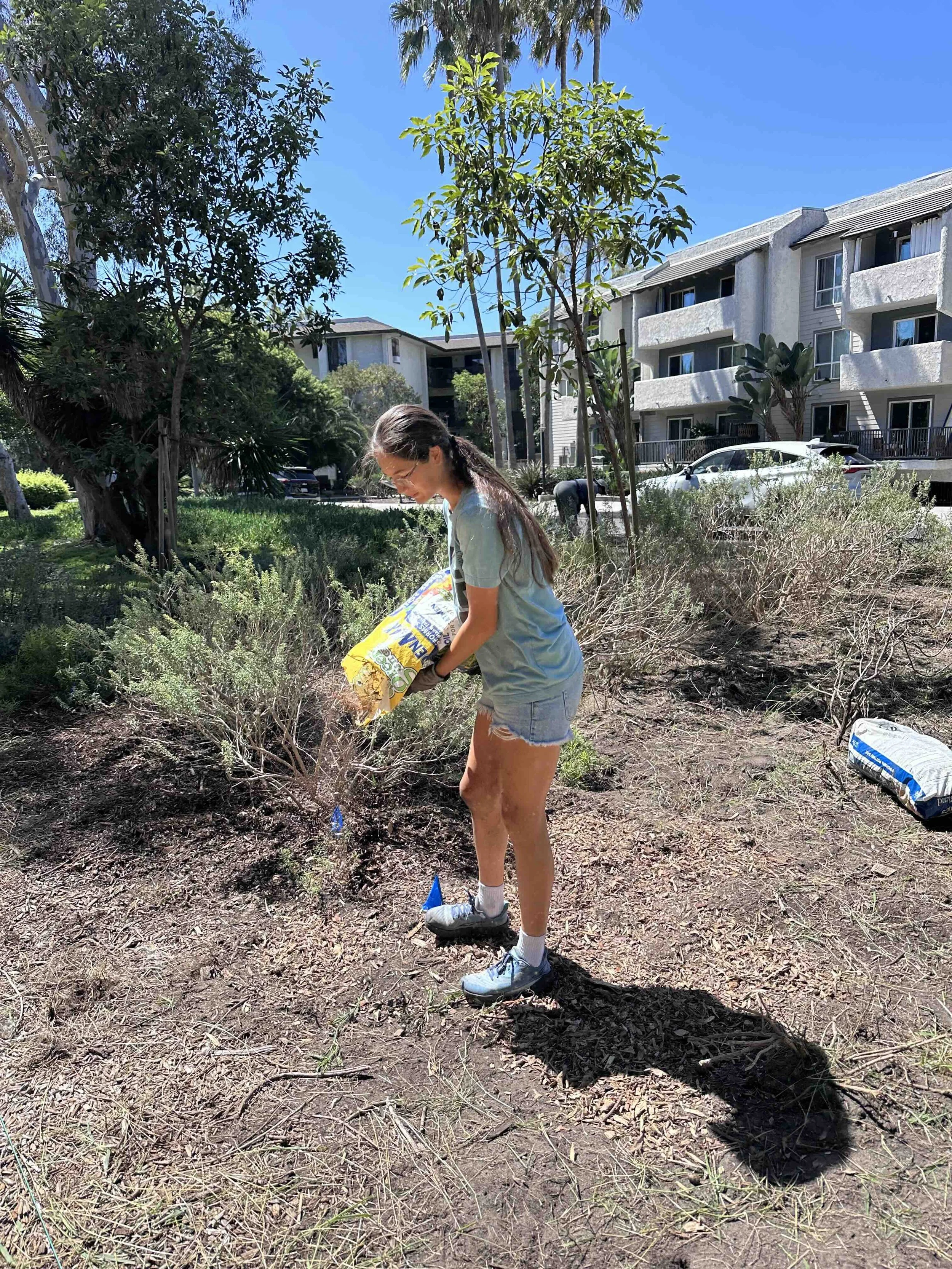
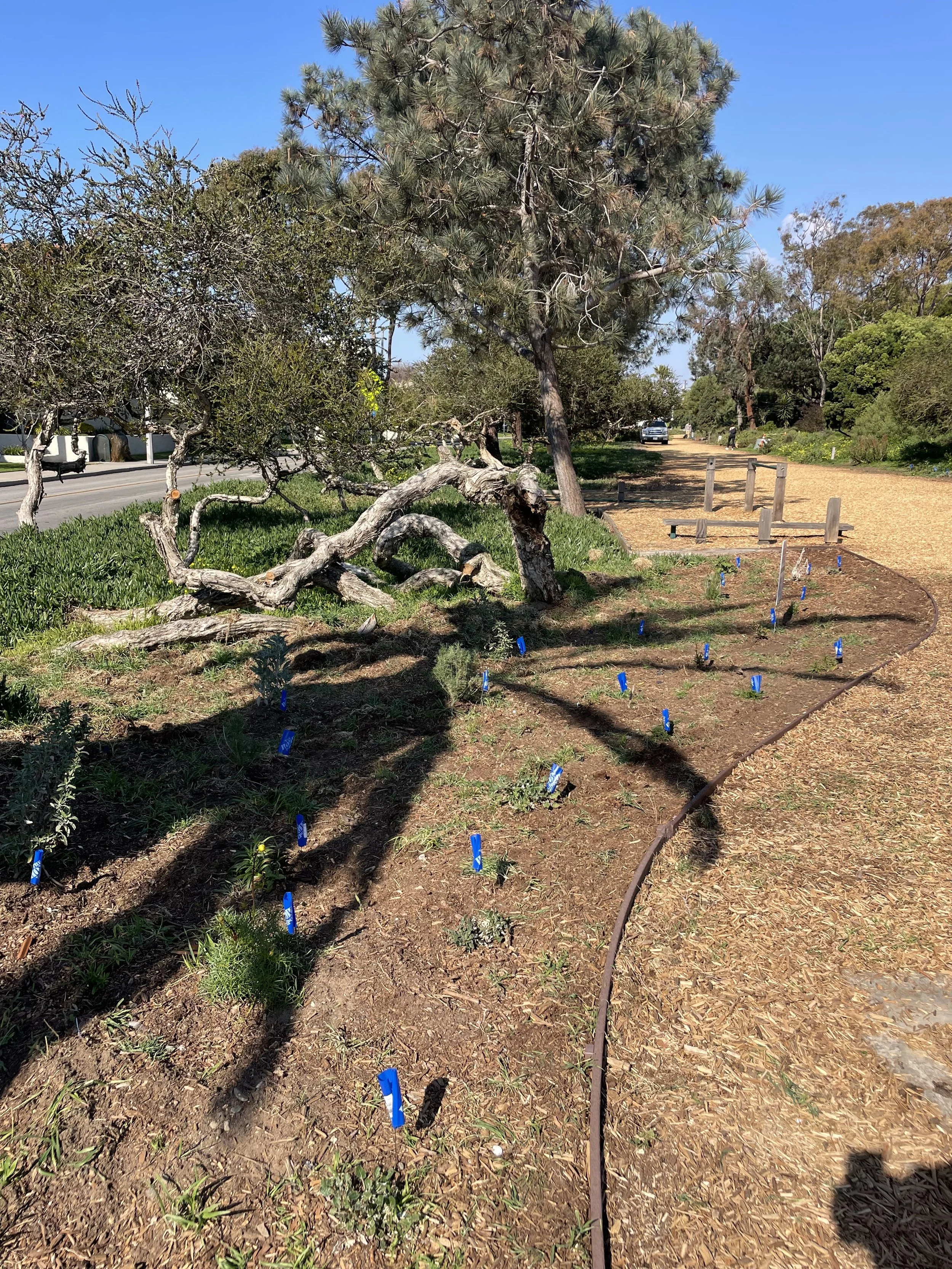
Apply mulch in a flat ring or donut shape around newly planted native plants, creating 3-to-6-inches of clearance around the stems of your plants. Piling mulch against a plants’ stem may cause fungal or bacterial infection resulting in decay and bark rot, and the trapped moisture may invite pests to attack tissue that is meant to stay dry.
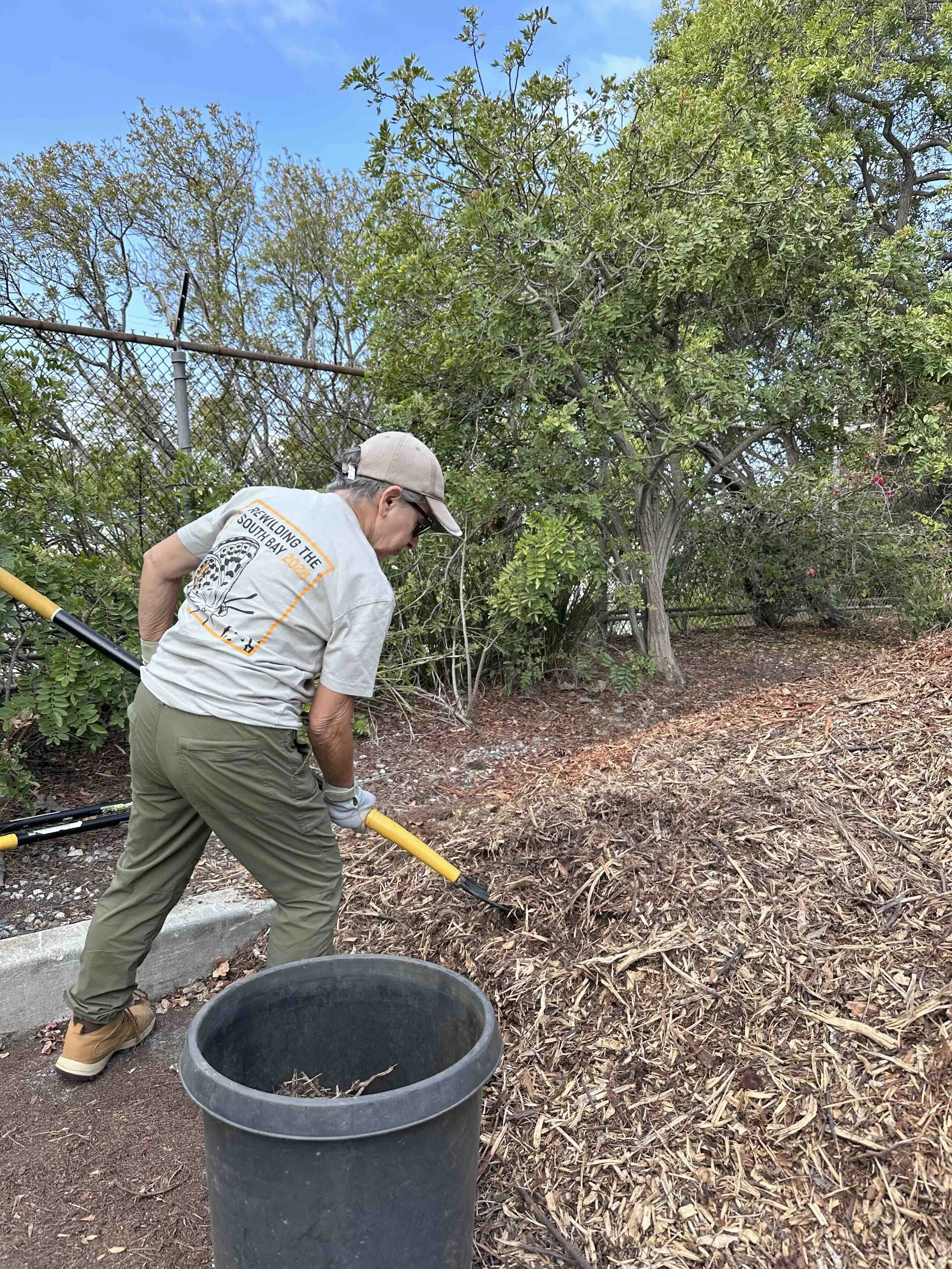
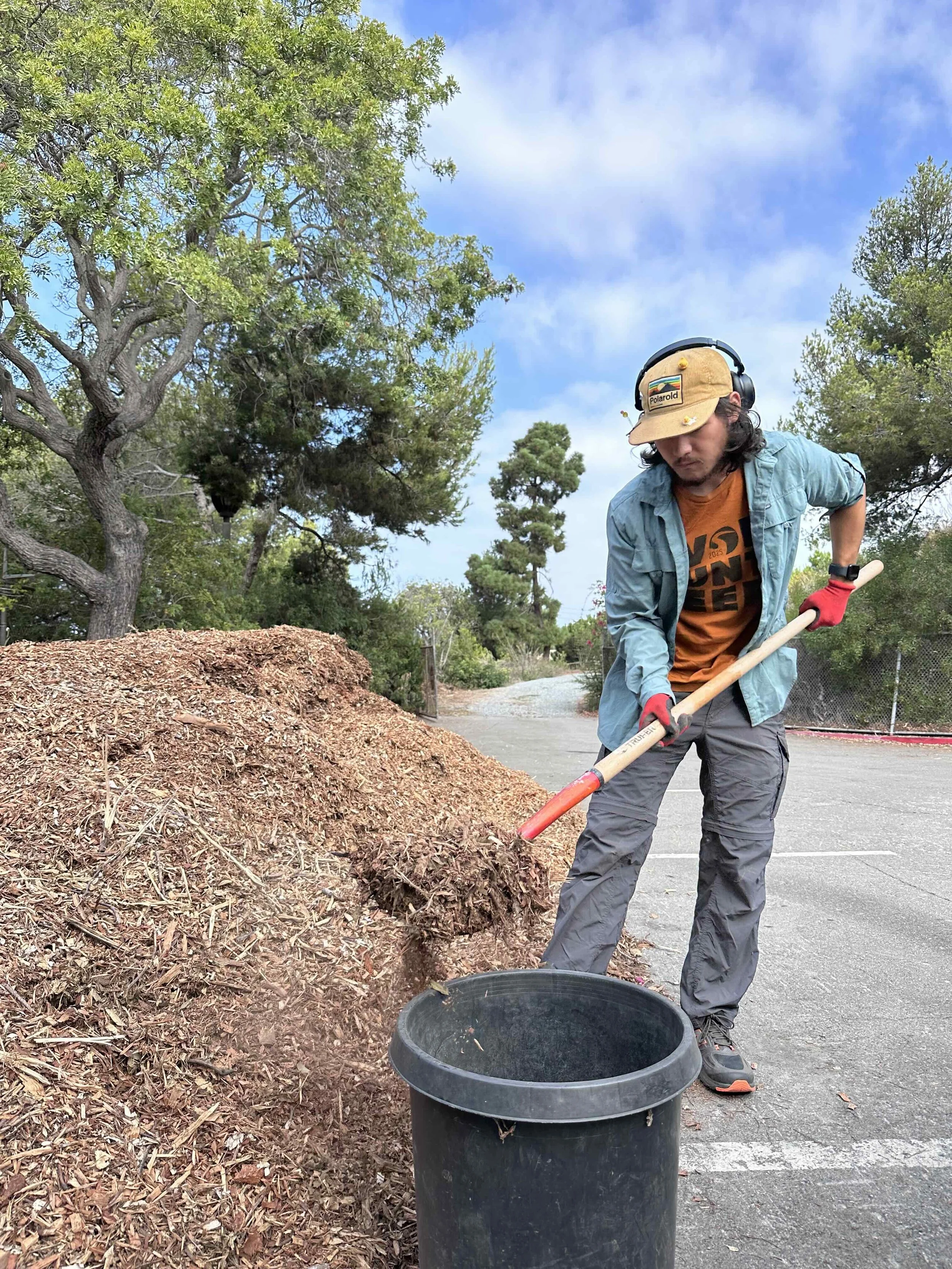
And finally, where do you get mulch?
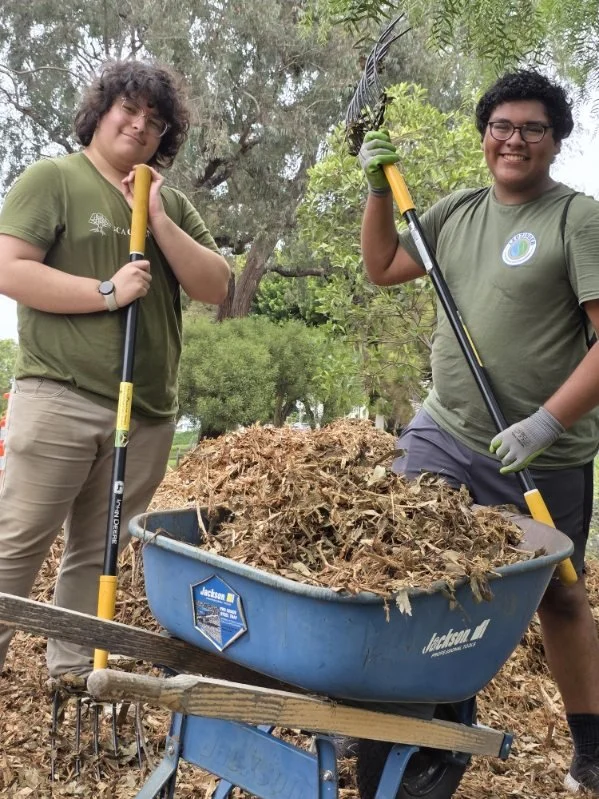
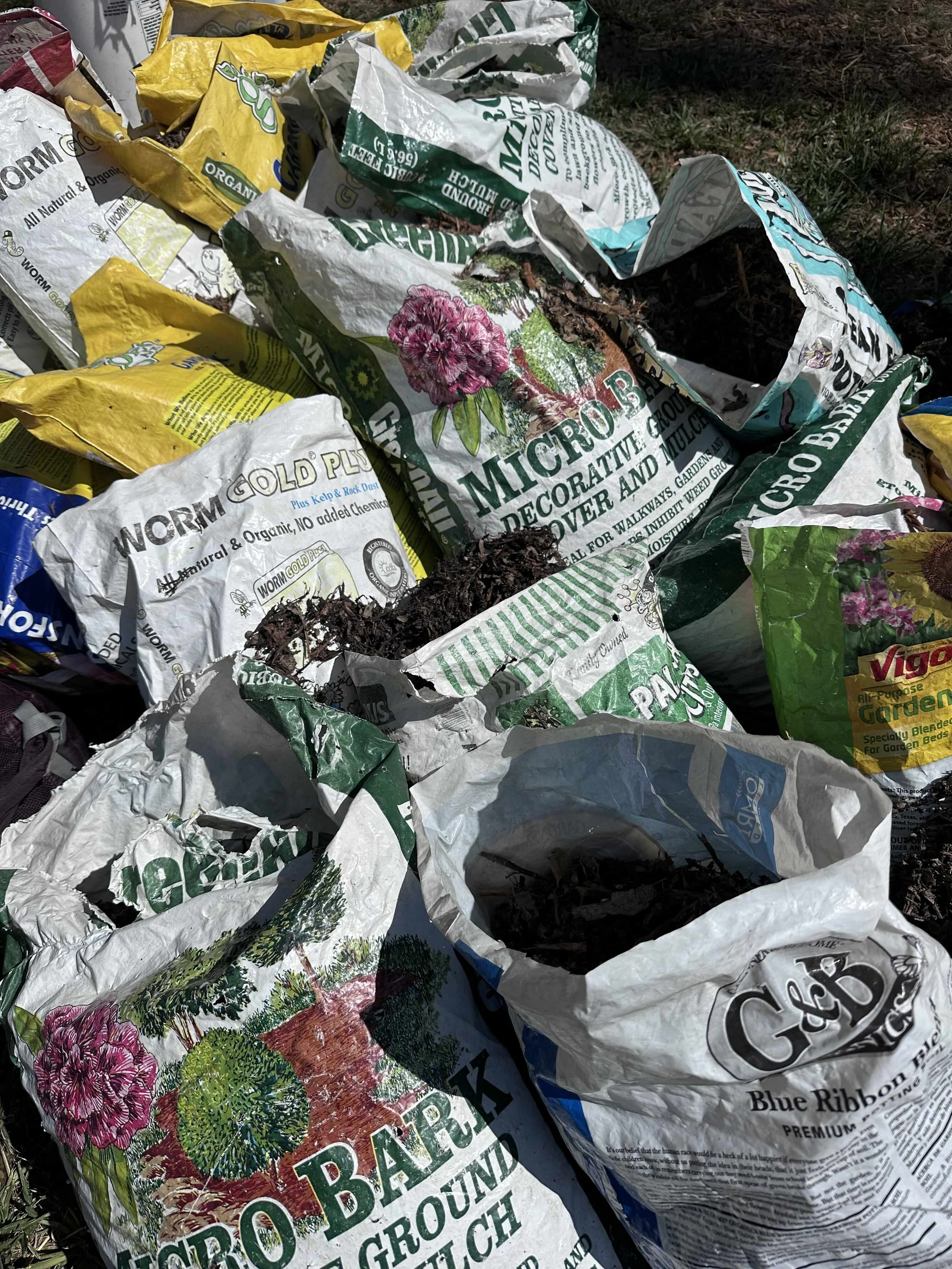
The type of mulch, and source of mulch, is very important. Trees and grasses have different needs, consequently mulch application needs to be applied accordingly. Avoid mulch made from plants that contain toxic compounds (such as eucalyptus), and plants that may dramatically shift the pH of the soil. Homemade mulch and compost from organic natives and produce is ideal. Mulch is often given away at your local city public works yards. There’s a free bin of mulch at the El Segundo Public Works (150 Illinois Street), another at the Manhattan Beach Public Works (3621 Bell Avenue). Very finely ground mulch is provided by San Pedro near the community garden on 1400 North Gaffey Street.
Helpful Resources